
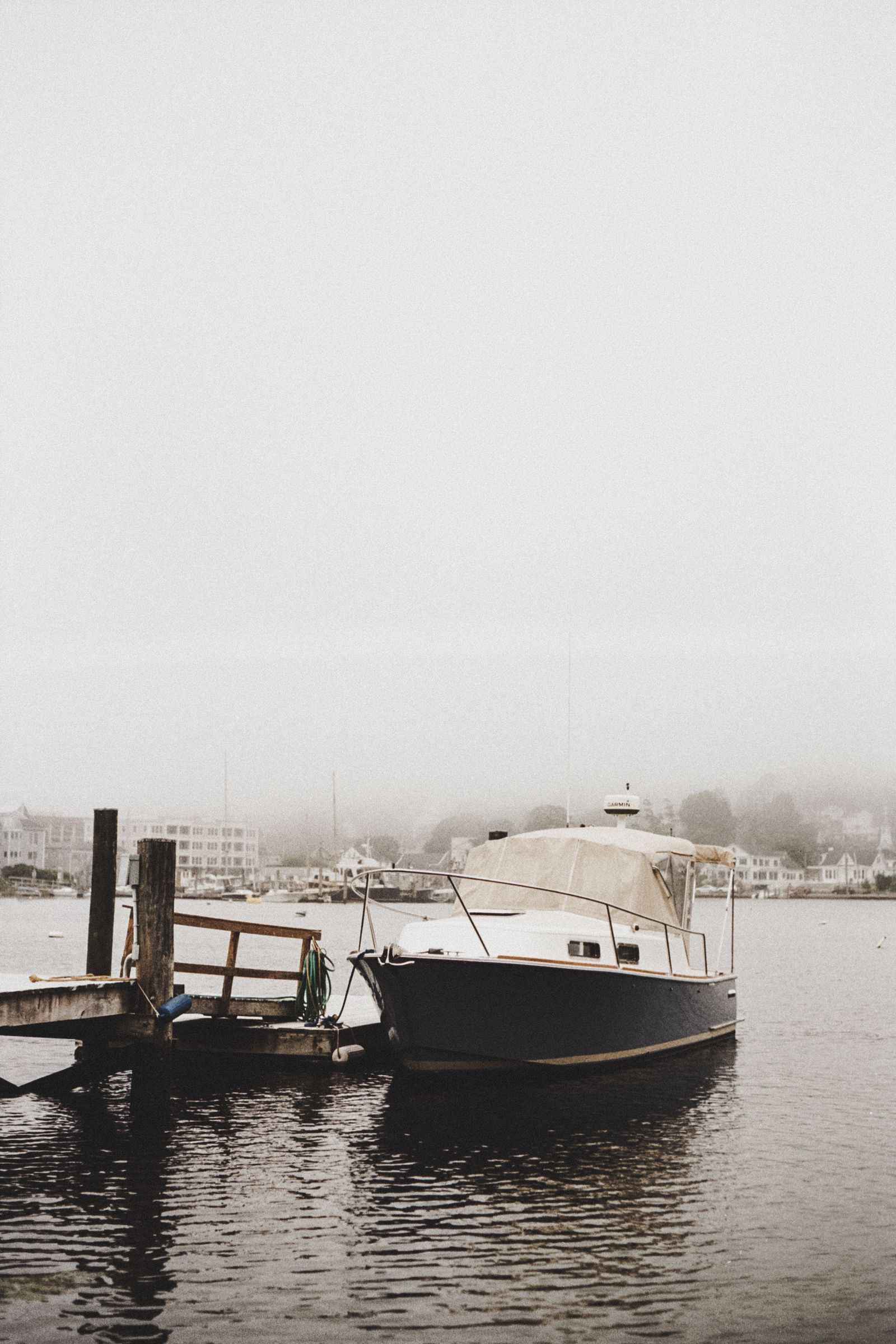
Store a diesel boat for the winter with the fuel tank nearly full, not empty. A full tank leaves little room for humid air, and it is that air space above the fuel that causes most off-season trouble. Top the tank off, add a diesel stabilizer and a biocide, put in fresh filters, and your fuel system will be ready to fire up cleanly next spring. Timing that last fill right before fall haul-out on the Jersey Shore is the simplest thing you can do to protect the season ahead.
Why a full tank beats an empty one
It feels natural to run a tank down before storage, but with diesel that works against you. The enemy of stored diesel is water, and the main source of water is condensation. Warm, humid air sitting in an empty or half-empty tank cools overnight, and moisture condenses on the bare metal walls and drips into the fuel. Do that for a few months of temperature swings and you can accumulate a real slug of water in the bottom of the tank.
Water in diesel causes two problems. It corrodes tank and system components, and it feeds the microbial growth boaters call diesel bug, a slimy colony that lives at the fuel-and-water boundary and clogs filters. Fill the tank nearly to the top and you crowd out the air, which means far less surface for condensation to form on. Less air, less water, less trouble.
Treat the fuel before it sits
A full tank is the foundation. Two additives finish the job:
- Diesel stabilizer slows the natural oxidation that degrades fuel over months of storage, so the diesel you leave in the fall is still good fuel in the spring.
- Biocide kills and prevents the microbial growth that thrives wherever water and diesel meet. This is your direct defense against diesel bug clogging filters next season.
Add both according to the label dose, then run the engine for several minutes after treating so the stabilized, treated fuel circulates all the way through the lines, filters, and injectors rather than just sitting in the tank.
Fresh filters going into storage
Change your primary and secondary fuel filters as part of laying the boat up, not just in spring. Fresh filters mean the system rests over the winter without a load of trapped water and gunk sitting against the media for months. It also means that on the first warm day next year you are starting clean and can get straight out on the water.
An end-of-season checklist
Fuel care is one piece of a proper lay-up. Run through the basics before the boat comes out:
- Top the fuel tank off nearly full.
- Add diesel stabilizer and biocide at the correct dose, then run the engine to circulate.
- Replace primary and secondary fuel filters.
- Change the engine oil and filter so the engine does not sit all winter on acidic, contaminated oil.
- Check the water separator bowl and drain off any water you find.
- Fog or otherwise protect the engine per your manufacturer’s lay-up guidance.
- Handle the cooling system, batteries, and bilge as your winterizing routine calls for.
None of it takes long, and every step you skip is a problem waiting for you in the spring.
Time your last fill right
The ideal move is to have that final top-off done just before haul-out, so the boat goes into storage with a fresh, full, treated tank rather than sitting fueled and untreated for weeks first. That is where dockside delivery makes life easy. Instead of squeezing in one more trip to the fuel dock during the busiest weeks of the fall, you have dyed off-road diesel brought right to your slip or private dock.
We run the public waterways of the Jersey Shore, including Barnegat Bay, the Manasquan Inlet, Little Egg Harbor, and the Intracoastal Waterway. Because we are on a different part of the shore every day, you enter your zip for your delivery day and price, then schedule your top-off to line up with your haul-out date. You save against the marina fuel dock, and we treat your boat like our own on the way out of the season, just as we do all summer.
Frequently asked questions
Full tank or empty tank for winter storage?
Nearly full. A full tank minimizes the air space where condensation forms, which is the main source of the water that corrodes tanks and feeds diesel bug.
Do I really need both stabilizer and biocide?
They do different jobs. Stabilizer keeps the fuel from degrading over months, and biocide prevents the microbial growth that lives at the fuel-water line. For a full off-season lay-up, use both.
Should I change filters in the fall or wait until spring?
Change them in the fall so the system stores clean, then you can start fresh next season. Many boaters carry a spare set aboard as well.
Can you top me off before haul-out?
Yes. Enter your zip for your delivery day and price, and we will bring diesel to your dock so you can treat the fuel and pull the boat with a full, fresh tank.
Lay the boat up the right way
A full, treated tank and fresh filters are the cheapest insurance your boat gets all year. When it is time for that last fill before haul-out, enter your zip for your delivery day and price, or call our marine team at 609-246-5900 to schedule your dockside delivery.